
Seen
On anxiety, ritual, and the compulsion to check your phone

My Invitation To You
The essay, read aloud. It covers the same ground as the written piece. If audio is how you best absorb ideas, I invite you to listen here first. I also invite you to read the essay itself, at your own pace, afterward.
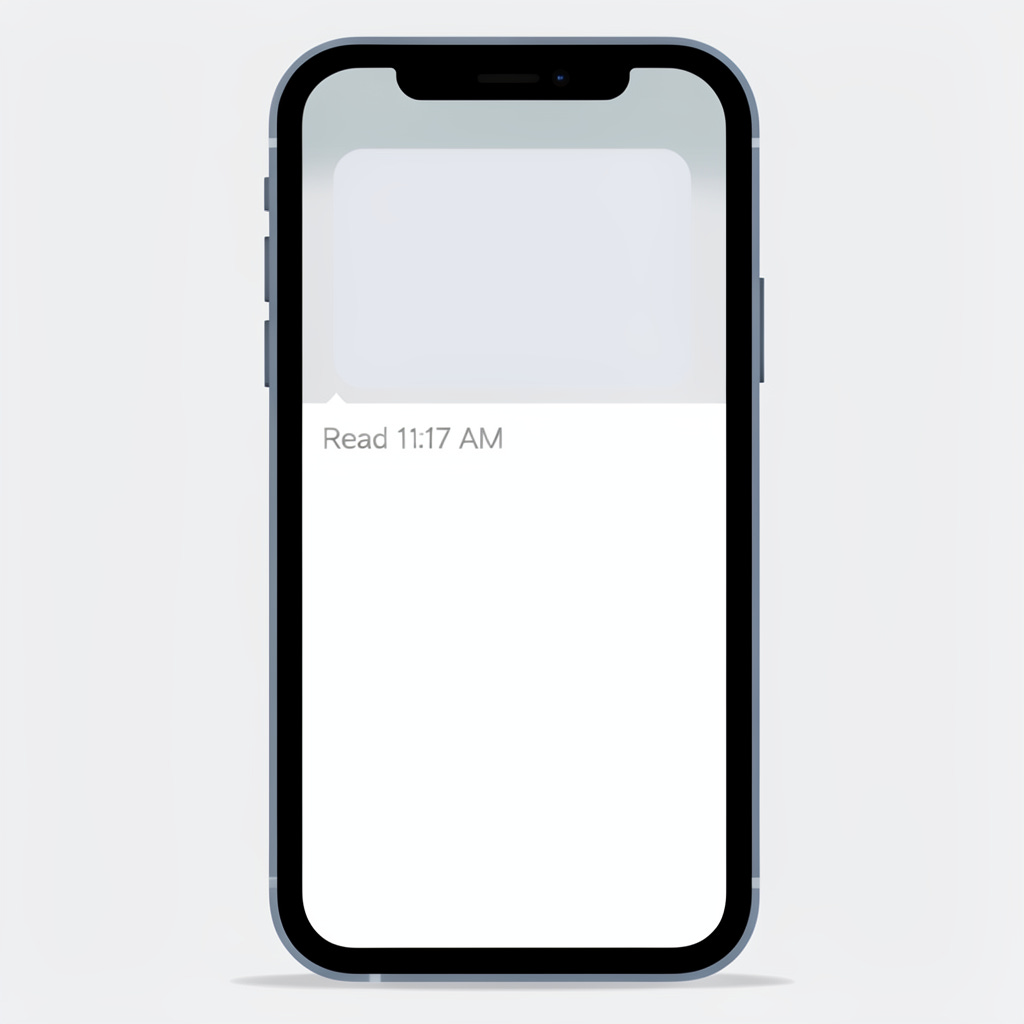
The timestamp says 11:17 AM.
It is now 2:43 PM and I have checked my phone six times since sitting down to write this sentence. Not because I expect anything. I stopped expecting in any conscious sense around noon, but because the checking has become something my hand does while my mind is elsewhere, the way you press a bruise to confirm it still hurts.
She saw the message. The receipt is right there, a small inert fact that refuses to be inert. It sits in the thread like a verdict with no sentence attached.
Here is what I know, rationally: silence means almost nothing on its own. People get busy. Phones go facedown. Messages arrive at bad moments and get filed under respond later, and later never comes, not because the person doesn’t care but because attention is fragmented and the notification will still be there when things settle. I know this. I have done this.
Here is what I know, less rationally, about this particular silence: it started after a message that was slightly more vulnerable than my average message. Not dramatically; I didn’t confess anything large. But there was a small exposure in it, and now that exposure is sitting out there unacknowledged, and I cannot stop building theories around why.
Theory one: she’s busy. Theory two: something landed wrong. Theory three: she’s fine and I’m catastrophizing. Theory four: she’s busy, but also something landed wrong, but also she’s waiting to see if the distance resolves on its own.
These theories are not equally weighted. The rational one sits at the top where I can endorse it consciously. The others run underneath, shaping the emotional weather while maintaining plausible deniability.
John Bowlby spent decades documenting what happens to people whose early attachment figures were inconsistent, how uncertainty about availability produces a specific attentional pattern, a hypervigilance to ambiguous signals, a nervous system calibrated to treat absence as data. He was writing about children and caregivers. But the pattern doesn’t retire when you grow up. It just waits for new surfaces to run on. The read receipt is one of the better surfaces anyone has ever designed for it: a piece of evidence that someone was present, that they saw you, and that something happened in the space between seeing and responding that you are not permitted to know.
I send a follow-up at 3:15. Not a real one. Nothing that references the original message or asks what’s going on. A meme. A small, light, deniable thing that says I’m still here without the embarrassment of saying I’m still here.
Erving Goffman called this facework, the continuous labor of protecting both your own social face and the faces of people around you. The meme offers her an exit from the silence that doesn’t require either of us to acknowledge a silence happened. It is a courtesy, extended under conditions of mild distress.
What I don’t examine, sending it, is that the meme is also the checking. Another version of the same compulsion, dressed differently. I’m not managing her discomfort. I’m managing mine,reducing the alarm briefly enough to get a few minutes of relief, which is exactly what the checking does, which is exactly what the theories do. I have, in other words, been doing one thing this entire afternoon while telling myself I was doing several different things. The theories were not analysis. They were the bruise-pressing. The meme was not kindness. It was the bruise-pressing with better optics.
I notice this and send the meme anyway.
She replies seven minutes later: a laughing emoji, “lol exactly.” And I feel, this is the part worth staying, with disproportionate relief. Not glad she replied relief. Everything is okay relief, the kind that belongs to the resolution of actual crises. The register was wrong for the situation. That gap between what happened and how it felt is the thing the afternoon was actually about.
The relief is real, but it isn’t really about her. It’s about the restoration of something that had been quietly running down since 11:17. Rituals, when they complete, generate a charge: solidarity, warmth, the specific comfort of mutual acknowledgment. When they’re interrupted, that charge depletes. What I felt at 3:22 wasn’t the warmth of reconnection. It was the cessation of a drain I’d stopped noticing because it had been running all day.
Before read receipts, silence was ambiguous, and ambiguity has a mercy in it: it distributes uncertainty rather than concentrating it. You didn’t know if they’d seen the message. Maybe they hadn’t. The not-knowing was uncomfortable but open.
The receipt collapsed that openness into a fact. Seen 11:17 AM. She was there. She chose not to respond yet. Now I don’t just wonder if she’s avoiding me, I have evidence she was present, and we both know I have it, and the meaning of it hangs between us simultaneously. That mutual awareness is what changes the moral character of silence. In Goffman’s world, a dropped conversation could be recovered or simply forgotten; the record was perishable. In mine the record is permanent, and the failure of acknowledgment is logged, visible to both parties, requiring management by both parties indefinitely.
This is not a small change. It transformed absence from an ambiguous state into a legible act, something done rather than merely not-done, which is a different moral category entirely. The failure to respond no longer just feels like distance. It feels, in some ambient register, like a choice made at my expense. I know, rationally, that it isn’t. But the knowing doesn’t touch the feeling.
Here is what I keep coming back to: I could not stop.
I saw what was happening while it was happening. I could name the mechanism, the hypervigilance, the spiral, the anxiety-management dressed as casual friendliness, while being completely subject to it. This is the part I find most difficult to sit with, more difficult than the afternoon itself: that understanding the loop offered no exit from it. That I reached for Bowlby and for Goffman, intellectually, the same way I reached for the meme, to do something, anything, that felt like being in control of an experience that was not under my control.
The theories were not exemptions. They were more checking.
She messages again at 6:47 with something small and funny, the kind of message that means we’re fine without saying so. I heart it immediately, without thinking.
I notice that I hearted it without thinking.
I notice that the noticing doesn’t make me stop.
What Bowlby understood, and what the afternoon confirmed, is that the need underneath all of this is not neurotic; it’s structural. Humans are social animals who survived in groups, and the monitoring of group membership, the continuous reading of signals about belonging and exclusion, was never optional. It was the work. The phone didn’t invent that work. It just made the work available at every moment, against every person you’ve ever been attached to, with a notification system that ensures you’ll never quite be able to put it down.
You don’t escape that by understanding it.
You just get to watch yourself, more clearly, not escape.