
Collaborative meaning-making: AI's role in transforming media consumption
Mediating my media experience of the show, "Severance"

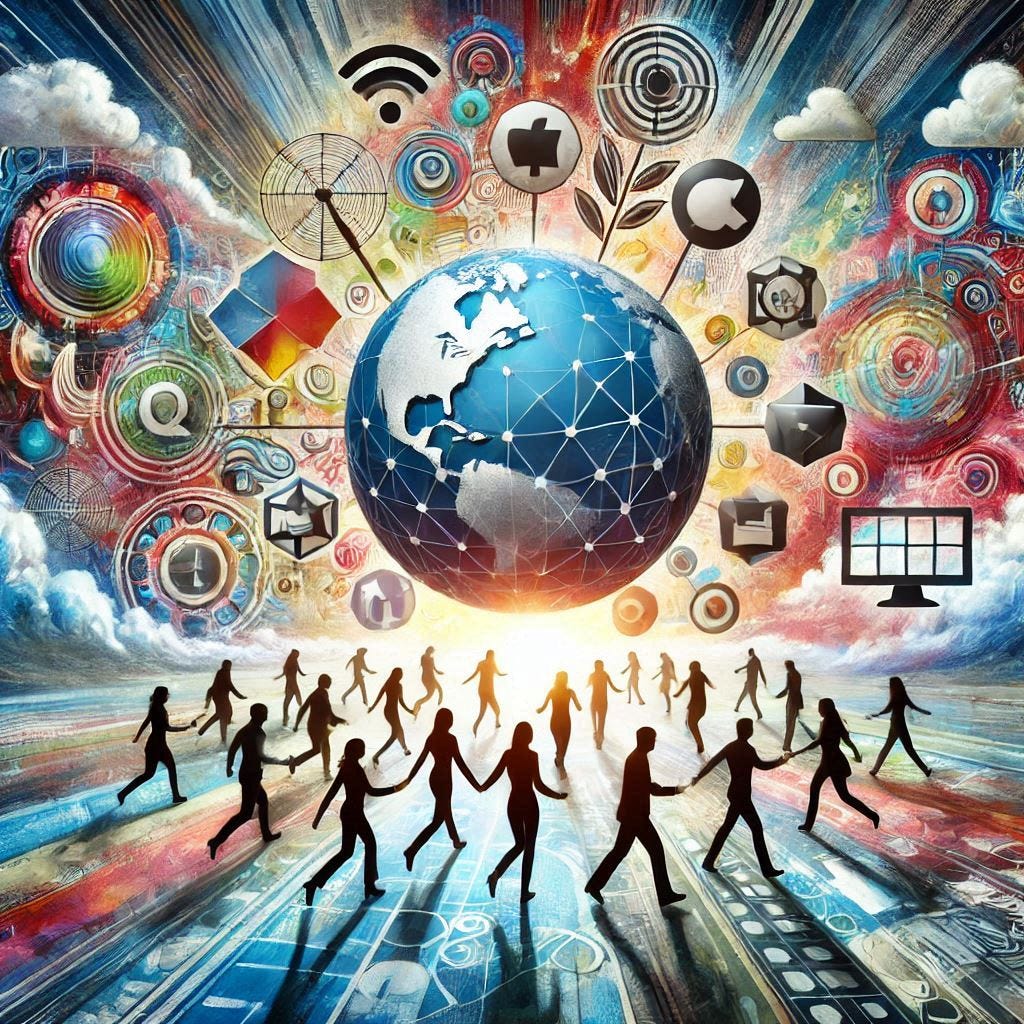
I have a weird quirk when it comes to visual media like shows and movies. More often than not, I prefer to consume analysis of the content than the content itself. This all became salient to me with the Apple TV show, "Severance" - a show that fascinated me more through its interpretations than its actual episodes.
A quick description from IMDb, “Mark leads a team of office workers whose memories have been surgically divided between their work and personal lives. When a mysterious colleague appears outside of work, it begins a journey to discover the truth about their jobs.”1
What began as a casual YouTube video about the show's cinematography spiraled into a labyrinth of video essays, podcast discussions, and critical breakdowns. For me, exploring everything I could find about a piece of art I appreciated made sense. I follow my curiosity and see where it takes me. However, when a friend asked, ‘So did you watch the show or not?’ I hesitated in my answer.
My viewing habits reveal something larger happening in our media landscape. Henry Jenkins calls this "convergence culture"2 - where content flows across platforms and audiences become active participants rather than passive consumers. This meant spending more time watching analyses of "Severance" than the show itself. This shift isn't just a personal oddity; it's a reflection of how digital technology is reshaping our relationship with media.
Adam Scott's character, Mark, serves as the POV character for many of the episodes as he navigates a life bifurcated into an ‘innie’ life at work and an ‘outie’ life outside of work. Through countless video essays, I learned more about his psychological fragmentation than I ever would have by simply watching the episodes. Each analysis added a layer of complexity, transforming my understanding from passive viewing to active interpretation. The additional context created a richness of understanding that I wanted to rewatch clips of episodes to re-experience and re-interpret what I was watching. These added layers of analyses gave me an insider’s knowledge. I now had a deeper understanding and wanted to devour more of it. And the algorithms of the internet were more than happy to indulge me with more content.
This phenomenon extends beyond "Severance." It's about how we consume and process media in the digital age. Norbert Wiener's concept of cybernetic feedback loops3 helps to explain. My choice to watch an analysis would trigger recommendations for more analyses, creating a self-reinforcing cycle of interpretation. This cycle isn't just about content recommendation; it's about how our digital interactions shape our understanding and perception of media.
These added layers of analyses gave me an insider’s knowledge. I now had a deeper understanding and wanted to devour more of it. And the algorithms of the internet were more than happy to indulge me with more content.
The implications of this shift are profound. As we increasingly engage with media through layers of interpretation, we're not just consuming content; we're actively constructing meaning. This process of meaning-making is collaborative, involving content creators, analysts, and viewers in a complex dance of interpretation and reinterpretation.
But something deeper was happening. My friend was calling me out on it. Was I avoiding the raw experience of the show? Thich Nhat Hanh4 might argue that I was disconnecting from the present moment, choosing mediated experiences over direct engagement. My "Severance" consumption became a meditation on media itself. This is all odd to me as this really only occurs with visual media. I’m happy with the abstraction of analysis for visual mediums, but with text like books, I still like to consume the content myself first.
This tension between direct experience and mediated understanding is at the heart of our evolving relationship with media. As we become more sophisticated consumers, we're also potentially distancing ourselves from the immediate, emotional impact of art. The challenge is to find a balance between intellectual engagement and raw experience.
Aleida Assmann's work on cultural memory5 provides another lens through which to view this phenomenon. Each analysis I watched wasn't just interpreting the show - it was actively constructing a collective memory of "Severance". The original content became almost secondary to its interpretations. This raises important questions about how we remember and understand media.
As our engagement with media becomes increasingly mediated, we must consider how this affects our cultural memory. Are we creating a richer, more nuanced understanding of media, or are we losing touch with the original artistic vision? The answer likely lies somewhere in between, but it's a question we must grapple.
The algorithms understood my preference for intellectual dissection over direct experience. Was this a form of digital self-protection? A way of maintaining emotional distance? I am ambivalent regarding algorithmic recommendations.
In certain contexts, recommendation algorithms are extremely helpful. When trying to find new ways of explaining a statistical concept, I do want as many examples of scientific communicators to observe on YouTube. When a topic is emotionally triggering and I can sense I’m trying to avoid the discomfort, do I want the recommendation algorithm to keep showing me more of what I’m finding emotionally difficult? No. Maybe yes? As of this moment, I’m not aware of a biometric sensor tracking my pulse to inform the YouTube algorithm to stop serving the same content. So for now, I’m fine that the recommendation algorithms know I prefer analysis over direct experience in media.
Our relationship with media is evolving. We're moving from passive consumption to active interpretation, from watching to understanding. Each analysis becomes a conversation, a way of making meaning.
As AI continues to curate our experiences, these questions become increasingly urgent. We're no longer just consuming media - we're navigating complex ecosystems of interpretation, where the line between original content and analysis blurs. This blurring of lines has implications for how we understand authorship, authenticity6, and the nature of artistic experience.
This isn't a critique, but my personal observation. Our relationship with media is evolving. We're moving from passive consumption to active interpretation, from watching to understanding. Each analysis becomes a conversation, a way of making meaning. This shift empowers viewers, turning us into active participants in the meaning-making process.
However, this empowerment comes with responsibility. As we engage more deeply with media analysis, we must remain aware of our own biases and the limitations of our perspectives. We must seek out diverse viewpoints and remain open to challenging our own interpretations.
My deep interest with "Severance" analyses reveals something fundamental about our digital experiences. We're not just watching shows anymore. We're constructing understanding, piece by piece, analysis by analysis. This process of construction is both individual and collective, personal and cultural.
The challenge isn't to resist this trend, but to engage with it mindfully. We are no longer passive consumers, but active participants in the creation of meaning. This shift brings both opportunities and challenges:
1. We have access to richer, more nuanced interpretations of media.
2. We can engage more deeply with content, going beyond surface-level understanding.
3. We are part of a global conversation about media and culture.
However, we must also be mindful of:
1. The potential for echo chambers and algorithmic bias in our media consumption.
2. The risk of losing touch with the immediate, emotional impact of art.
3. The need to critically evaluate the analyses we consume.
We should embrace the richness of interpretation available to us while also maintaining a connection to the original art.
As I continue my journey through watching analyses and sometimes watching shows and movies, I'm learning something important. In this digital experience, meaning is no longer found - it's constructed, collaboratively and continuously.
IMDb. (2022). Severance. https://www.imdb.com/title/tt11280740/
Jenkins, H. (2006). Convergence culture: Where old and new media collide. New York University Press.


